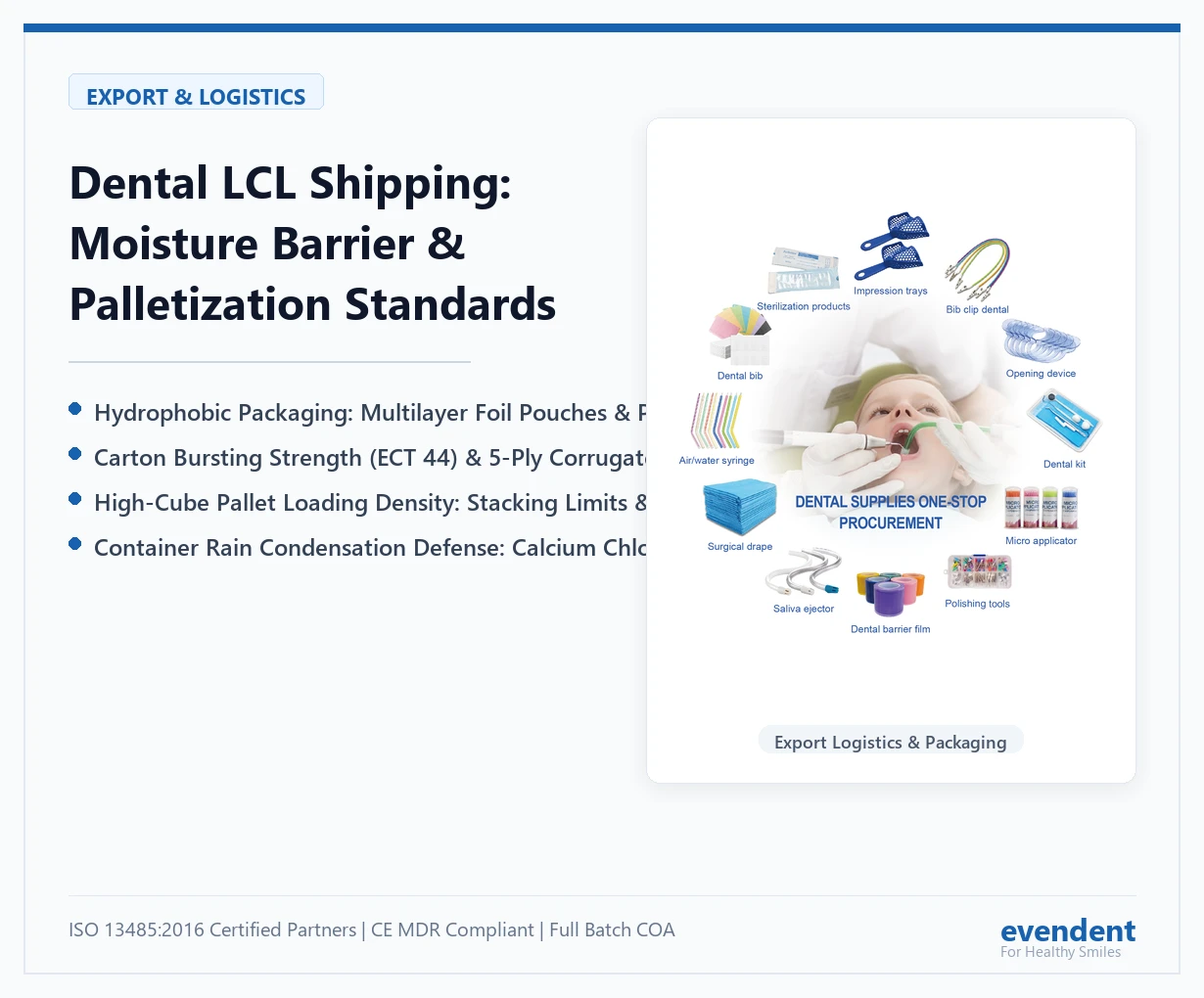

Importing dental consumables from international manufacturing hubs involves significant maritime logistics. While Full Container Load (FCL) shipments allow direct factory-to-warehouse sealing, small-to-medium dental distributors and regional dealers frequently rely on Less-than-Container Load (LCL) ocean freight to optimize inventory turnover and working capital.
However, LCL cargo is exposed to distinct risks: multi-stage handling at consolidation warehouses, rough transit motion, cross-cargo contamination, and the phenomenon of “container rain” caused by dramatic temperature swings. Without specialized export packaging, moisture-sensitive consumables—including dental alginates, gypsum stone powders, and cellulose dental bibs—risk total inventory spoilage.
1. Ocean Transit Microclimates: The Container Rain Phenomenon
During ocean transit across varying climatic zones (such as South China Sea transit to European or North American ports), shipping containers undergo extreme diurnal temperature cycling:
DAYTIME: Container roof heats up to 60°C -> Air absorbs vast amounts of water vapor
                                   |
NIGHTTIME: Rapid cooling to 15°C -> Dew point reached -> Condensation on steel ceiling
                                   |
RESULT: Heavy water droplets fall directly onto cargo stacks ("Container Rain")
Specific Vulnerabilities of Core Dental Consumables
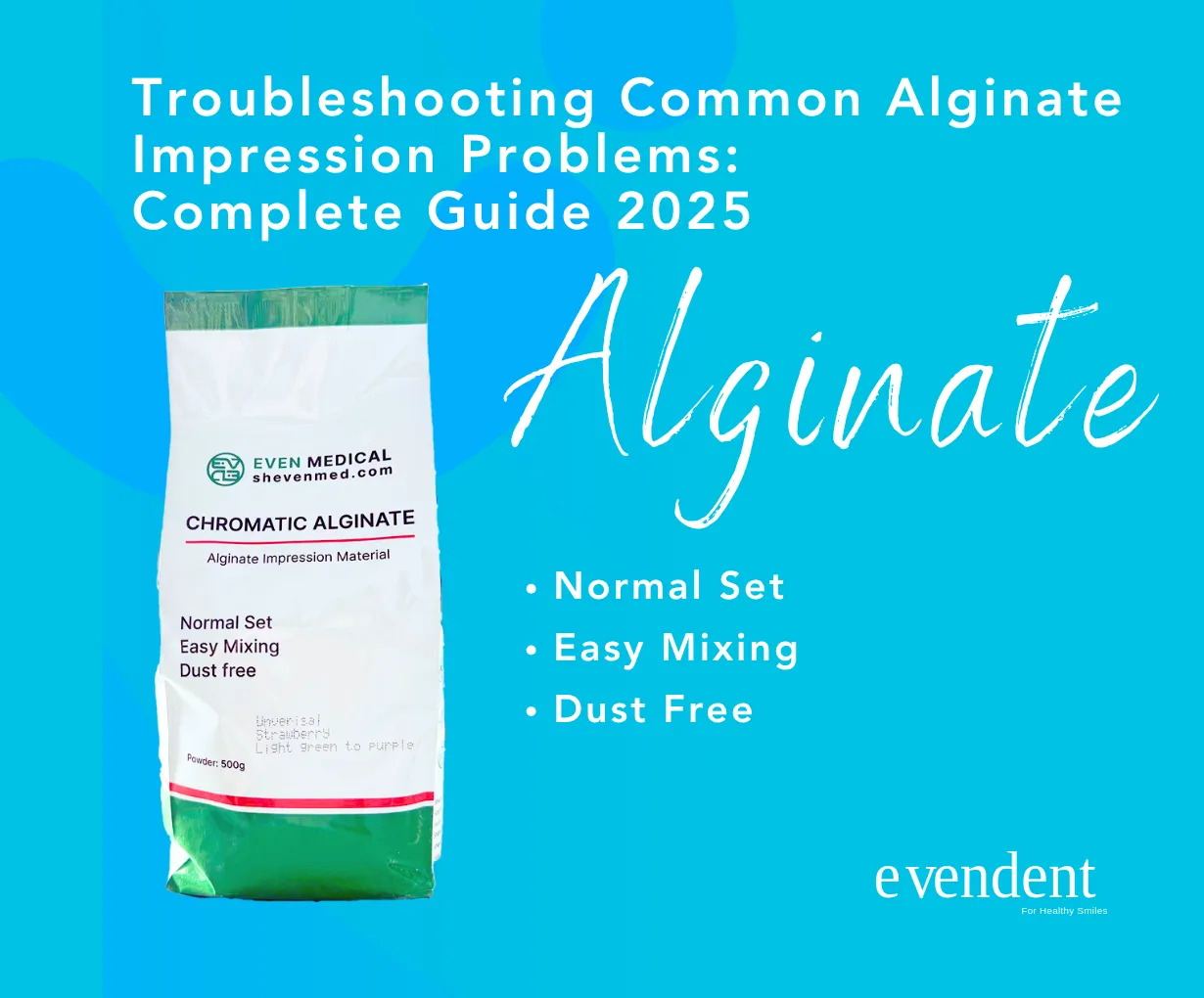
- Dental Alginate Powders: High ambient humidity penetrates standard packaging, causing premature hydration of sodium alginates and clump formation, ruining setting times.
- Type III & Type IV Dental Stone: Moisture causes premature surface crystallization of hemihydrate crystals into dihydrate, resulting in prolonged setting times and weak, crumbly casts.
- Disposable Dental Bibs: 2-ply cellulose tissue readily absorbs ambient moisture, leading to mold formation, carton collapse, and loss of absorbent tensile strength.
2. Engineering Defense: Multilayer Moisture-Barrier Packaging Standards
To withstand trans-oceanic LCL transit without degradation, packaging must integrate multiple barrier layers:
| Packaging Layer | Engineering Specification | Protective Function |
|---|---|---|
| Primary Inner Pouch | Triple-layer PET / AL / PE composite foil (thickness ≥ 110 μm) | Hermetic gas and moisture vapor barrier (WVTR < 0.05 g/m²·24h) |
| Secondary Liner | Heavy-duty virgin polyethylene (PE) gusset bag with cable-tie seal | Protects inner boxes from external liquid penetration |
| Master Export Carton | 5-ply double-wall corrugated fiberboard (K=K, 250 lbs/in² burst test) | Resists high-humidity compressive collapse during LCL multi-tier stacking |
| Moisture Absorption | Container-grade Calcium Chloride (CaCl₂) desiccant bags with Tyvek lining | Absorbs up to 200% of its dry weight in moisture without leakage |
| Pallet Encapsulation | 7-layer automated spiral stretch-film wrap (23 μm thickness) + Top PE sheet | Hermetically seals the entire pallet load against ambient humidity |
3. LCL Consolidation Risks: Warehouse Cross-Contamination and Physical Handling
In an LCL consolidation container, medical dental supplies share space with unrelated industrial freight, chemicals, or heavy machinery. Mitigation protocols include:
1. No-Stack Cone Protectors
LCL cargo handlers frequently stack heavy pallets atop medical supply cartons unless physically deterred. Every pallet must feature high-visibility cardboard “Do Not Double Stack” pyramid warning cones banded to the top tier.
2. Edge Protectors and Pallet Strapping
High-strength kraft paper V-shaped corner boards (edge protectors) running the full vertical height of the pallet distribute vertical strapping tension, preventing carton edge crushing and pallet tipping during forklift transfers.
3. Fumigated Wooden or Plastic Pallets
Ensure all wooden pallets bear the ISPM 15 compliance stamp (Heat Treated – HT) to clear customs inspection without fumigation delays. For pharmaceutical-grade cleanroom compliance, consider heavy-duty, reusable plastic pallets.
4. Cost Optimization: Volumetric Weight vs. Density Calculations
LCL ocean freight rates are billed based on Revenue Tons (W/M – Weight or Measurement), where 1 CBM (Cubic Meter) is evaluated against 1,000 kg:
+----------------------------------------------------------------------+
|             DENTAL PRODUCT PALLETIZATION & DENSITY RATIOS            |
+----------------------------------------------------------------------+
| High-Density Cargo: Dental Stone (1 CBM ~ 1,400 kg) -> Billed by Weight|
| Volumetric Cargo:   Dental Bibs (1 CBM ~ 250 kg)   -> Billed by Volume |
| Mixed Consolidation: Balancing heavy stone pallets with lightweight    |
|                      bib pallets optimizes container space and costs |
+----------------------------------------------------------------------+
- Carton Dimension Harmonization: Standardizing carton dimensions to fit Euro-pallets (1200 x 800 mm) or Standard Industrial pallets (1200 x 1000 mm) eliminates overhang and maximizes container cube utilization up to 92%.
5. B2B Commercial Documentation & Compliance Checklist
To ensure swift customs clearance and regulatory acceptance upon arrival:
- Commercial Invoice & Packing List: Itemized with exact Harmonized System (HS) Codes (e.g., Alginate: 3006.40, Gypsum: 2520.20, Disposable Paper Bibs: 4818.90).
- Certificate of Origin (COO): Form A, Form E, or RCEP certifications to unlock preferential import tariff rates.
- Certificates of Analysis (COA): Batch-specific release reports verifying moisture content (< 1.5% for alginate powders) and mechanical testing results.
- Regulatory Compliance Pack: ISO 13485:2016 factory certification and CE Declaration of Conformity (DoC) ensuring seamless entry through destination medical device authorities.
Related EvenDent Products & Guides:
– Further Reading: importing dental consumables from China and impression material ROI analysis.
 English
 Español
 Português
 Français
 Italiano
 Deutsch
 Русский
 日本語
 한국어
 العربية