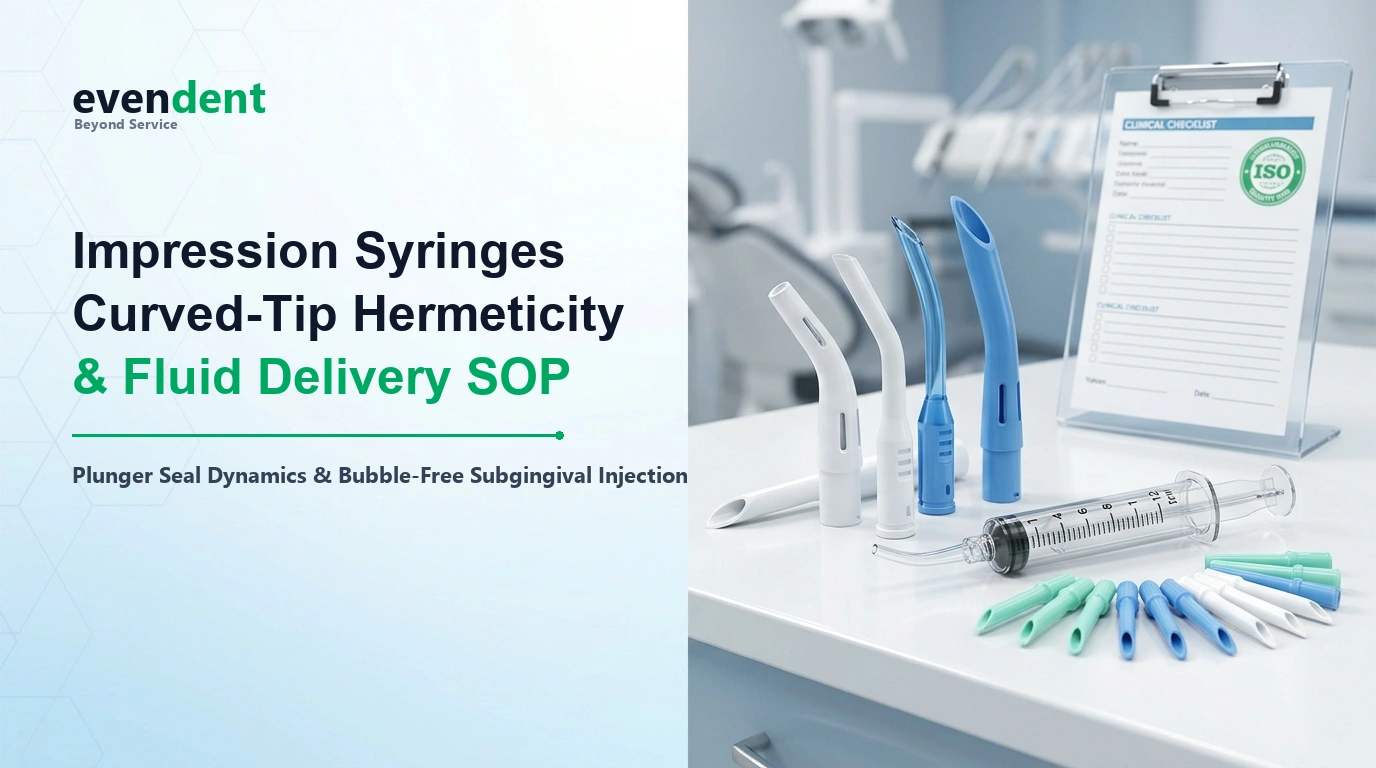

In precision restorative impressions, pediatric cavity irrigation, surgical socket cleansing, and elastomeric delivery, the Disposable Curved-Tip Syringe (12 mL) is an essential operatory consumable. While automix guns dominate crown-and-bridge impressions, curved-tip syringes remain indispensable for loading elastomeric wash directly into tight interproximal spaces, deep post channels, and full-arch custom impression trays without air entrapment.
However, poorly molded generic utility syringes suffer from plunger sticking (“stick-slip”), catastrophic blow-by leakage, and brittle nozzle snapping.
1. Mechanical Anatomy: Barrel Tolerances and Hermetic Plunger Dynamics
A precision utility syringe consists of a graduated barrel and a sliding plunger assembly designed to deliver controlled hydrodynamic extrusion:
+------------------------------------------------------------------------+
|                CURVED-TIP SYRINGE COMPONENT ARCHITECTURE               |
+------------------------------------------------------------------------+
| 1. Trimmable Curved Tip (45° Anatomical Arc / Outer Dia: 2.0 to 4.0 mm)|
| 2. Graduated Clear Polypropylene Barrel (1 to 12 mL Capacity)          |
| 3. Dual-Ring Elastomeric Plunger Gasket (Hermetic Hydraulic Seal)      |
| 4. Ergonomic Thumb Ring & Finger Flange (Smooth Single-Hand Extrusion) |
+------------------------------------------------------------------------+
The “Stick-Slip” Defect in Low-Grade Syringes
- Inferior syringes use hard plastic plungers without elastomeric gasket seals, or use unrefined rubber gaskets coated with excessive industrial silicone oil.
- Static vs. Dynamic Friction Disparity: When the clinician applies thumb pressure, static friction resists initial movement; once broken, the plunger leaps forward abruptly (“stick-slip”). This sudden surge splatters impression paste or shoots irrigation fluid past the target zone.
- EvenDent Precision Tolerances: Barrels molded from virgin medical-grade polypropylene feature a mirror-polished internal lumen. Plungers incorporate medical thermoplastic elastomer (TPE) dual-wiper gaskets, ensuring smooth, linear plunger glide under single-hand control.
2. Trimmable Curved Nozzle: Customizing Flow Caliber
The integrated curved nozzle features an anatomical 45-degree angle with a progressive conical taper:
| Cut Location on Nozzle | Resulting Orifice Caliber | Flow Rate Profile | Primary Clinical Application |
|---|---|---|---|
| Uncut Factory Tip | ~ 1.5 – 2.0 mm diameter | Ultra-Fine, High Back-Pressure | Fine margin wash, post spaces, narrow gingival sulcus |
| Middle Bevel Cut | ~ 2.5 – 3.0 mm diameter | Moderate Flow, Balanced Force | General restorative wash, impression tray loading |
| Base Broad Cut | ~ 4.0 mm diameter | High-Volume Rapid Extrusion | Surgical extraction socket irrigation, alginate syringed loading |
- Tip Elasticity & Fracture Resistance: The nozzle is engineered with high-impact polymer additives. When curved against alveolar margins or inserted into extraction sites, the tip flexes without shearing off or producing plastic whitening (crazing).

3. Fluid Delivery Comparison: Utility Syringes vs. Automix Guns
| Operational Feature | 12 mL Disposable Curved-Tip Syringe | 50 mL Hand Automix Gun with Tip |
|---|---|---|
| Bulk Capacity | 12 mL (Sufficient for full-arch wash) | 50 mL (Heavy, bulky handpiece) |
| Posterior Access | Unrestricted (Slender curved nozzle) | Restricted by bulky cartridge head |
| Material Flexibility | Handles VPS, Polyether, Alginate, Saline | VPS / Polyether dual-barrel only |
| Cleaning & Hygiene | 100% Single-Patient Disposable | Requires barrier bagging and disinfection |
| Cost Per Delivery | Extremely economical (~ 0.15–0.25) | Higher tip wastage (~ 0.40–0.80) |
4. Clinical Protocol: Bubble-Free Impression Syringing
To eliminate marginal voids when using curved-tip syringes for elastomeric wash delivery:
- Back-Loading: Remove the plunger. Express mixed light-body or regular-body wash directly into the back barrel opening, filling to the 8–10 mL graduation mark.
- Plunger Insertion and Air Bleeding:
- Insert the plunger gasket gently into the barrel.
- Invert the syringe (curved tip pointing upward) and tap the barrel lightly to allow trapped air bubbles to rise to the nozzle base.
- Depress the plunger slowly until a continuous bead of impression material extrudes from the tip, purging all internal dead air.
- Continuous Sub-Margin Flow:
- Angle the curved nozzle directly into the gingival margin.
- Depress the plunger with steady, continuous thumb pressure while moving smoothly around the circumference of the tooth preparation. Keep the nozzle immersed in the extruded silicone to eliminate interfacial air lines.
5. Wholesale Sourcing & Packaging Optimization
For dental supply distributors, clinic procurement departments, and hospital networks:
- Volumetric Markings: Permanent, high-contrast molded or debossed graduations (1 mL increments up to 12 mL) that will not rub off when exposed to water or disinfectant solvents.
- Packaging Configurations: Individually blister-sealed units (50 pcs/box) for surgical hygiene, or cost-effective bulk bags (100 pcs/bag, 1,000 pcs/master export carton).
- Regulatory Compliance: Fully compliant with ISO 13485:2016 quality management systems, CE Class I registration, and FDA 510(k) exempt status, backed by complete ISO 10993 biocompatibility certification (non-pyrogenic, non-toxic, latex-free).
Related EvenDent Products & Guides:
– Product Range: Browse the Impression Materials category hub.
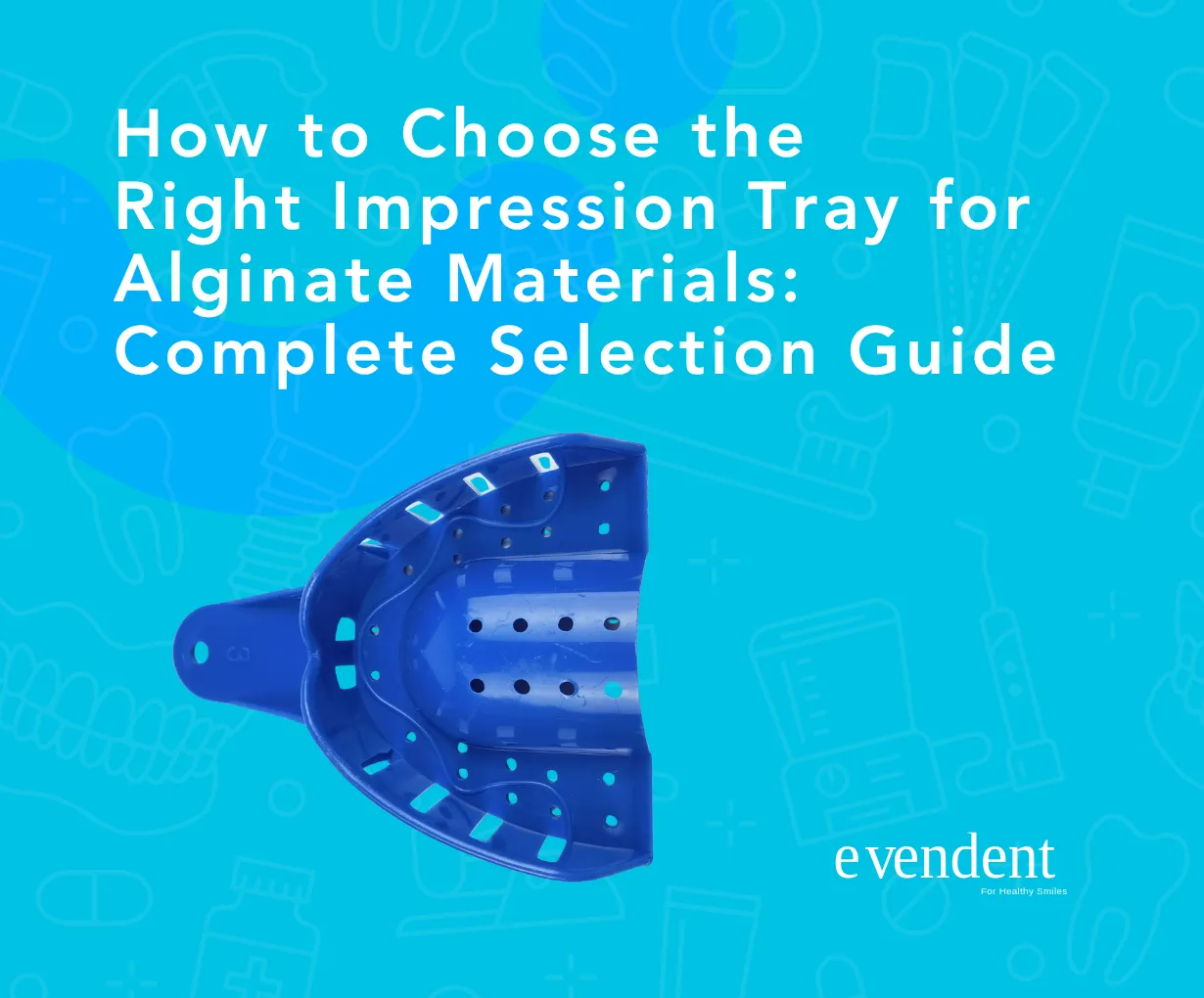
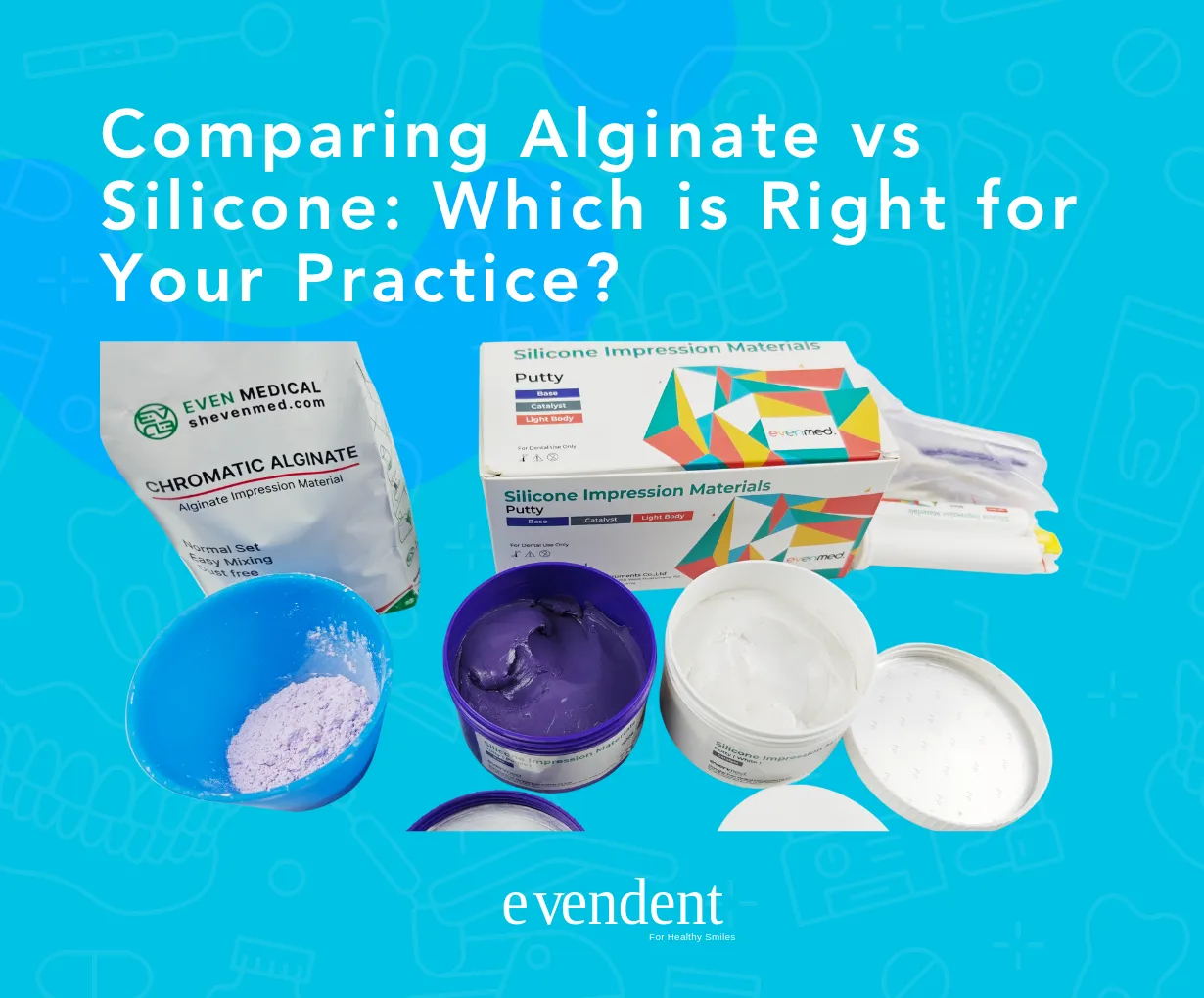
– Further Reading: VPS impression material guide and impression materials selection guide.



 English
 Español
 Português
 Français
 Italiano
 Deutsch
 Русский
 日本語
 한국어
 العربية